Thailand's Land and Building Tax: What Business Owners Should Know
A clear overview of the Land and Building Tax Act B.E. 2562, the four usage categories, and how proper planning can reduce your property tax burden legally.
The Land and Building Tax Act B.E. 2562 (2019) reshaped how Thailand taxes real property. If your business owns or holds land or buildings, the rules directly affect your running costs.
Who pays
Any individual or legal entity who owns, possesses, or makes use of land or buildings as of 1 January of the relevant tax year.
Rates by type of use
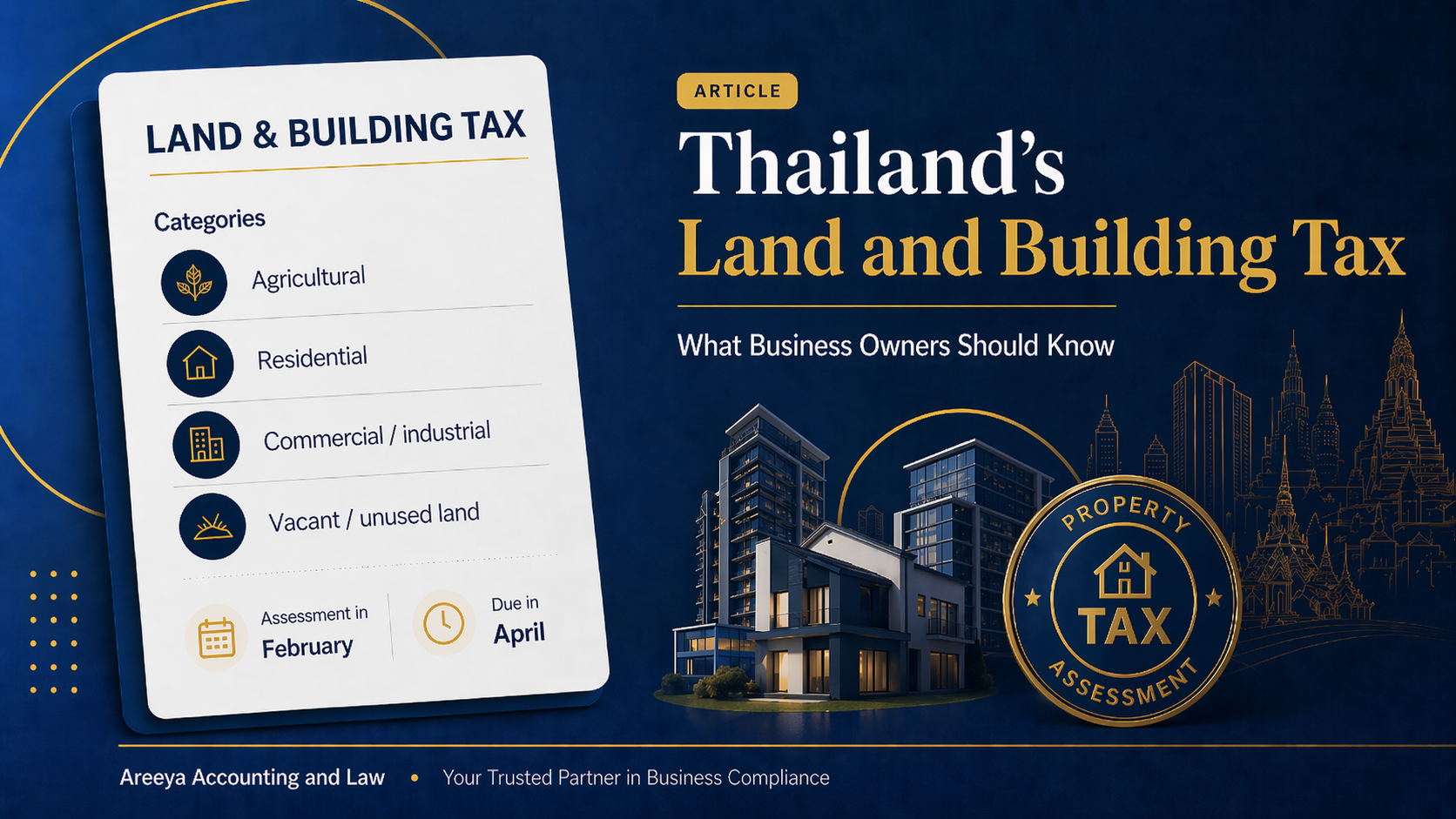
Rates vary by how the property is used, divided into four groups:
- Agricultural — lowest rates, with exemptions for individuals
- Residential — exemptions for the first home, subject to conditions
- Commercial / industrial (“Other”) — higher rates than the groups above
- Vacant or unused land — highest rates, and the rate rises every 3 years the land remains idle
Plan the use of your property
How your property is classified has a real impact on tax. Vacant land, for example, is taxed at a higher rate than land actively used for farming or housing.
For business owners, we suggest:
- Reviewing every property the company owns and classifying its actual use
- Considering whether unused land could be put to productive use
- Planning any transfers, sales, or leases with tax efficiency in mind — legally
Paying the tax
The local administrative organisation (BMA, municipality, or TAO) issues an assessment in February, and the tax is due in April each year.
If you haven’t received an assessment, contact your local office — missing the deadline adds surcharges and penalties.
Need advice on property tax planning for your business? Talk to our team.