Taxes for Online Sellers in Thailand: A Plain-English Guide
What online sellers in Thailand actually need to know about personal income tax, corporate tax, and VAT — and how to stay compliant without overpaying.
Selling online has become a mainstream income source in Thailand, but many sellers still aren’t sure when and how they have to pay tax. Here’s a practical rundown.
Personal income tax vs. corporate tax
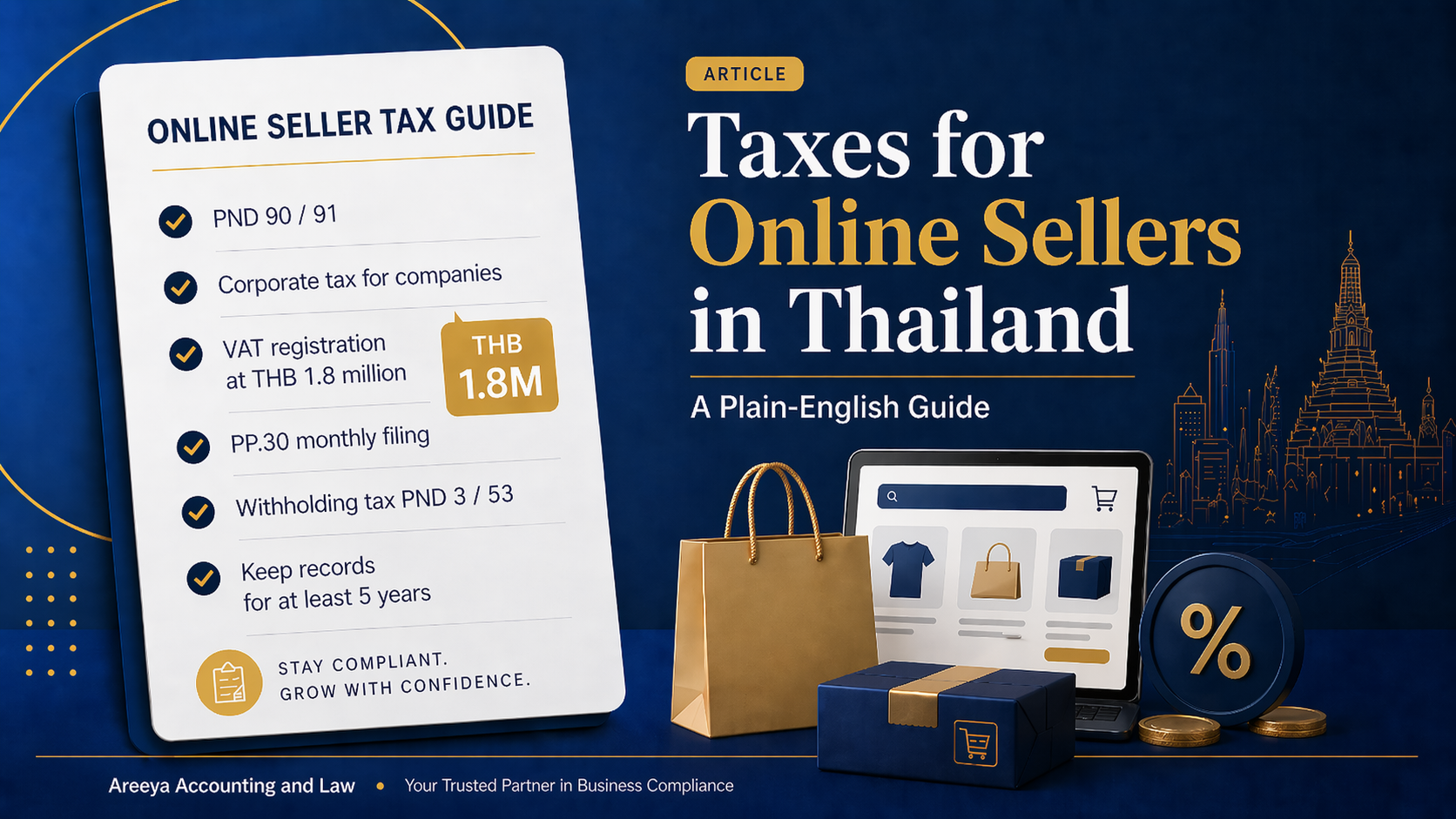
If you haven’t registered a company yet, online sales income is treated as Section 40(8) personal income. You’ll file a PND 90/91 personal income tax return.
Registering a limited company can make sense once revenue grows, because:
- Corporate tax rates are often lower for SMEs (stepped rates 0–20%)
- You can deduct actual business expenses without statutory caps
- A registered entity is taken more seriously by suppliers and customers
VAT (Value Added Tax)
Once revenue exceeds THB 1.8 million per year, you must register for VAT within 30 days. Missing this deadline triggers back-dated assessments, surcharges, and penalties.
Once VAT-registered:
- You must issue a tax invoice on every sale
- File PP.30 monthly, even in months with zero sales
- Keep records for at least 5 years
Withholding tax
If your business pays for advertising, rent, or various services, you generally need to withhold tax and file PND.3 or PND.53 by the 7th of the following month.
Plan early, stay compliant, save more
Paying tax correctly isn’t just about sending money to the Revenue Department. It’s about setting up good habits from the start of the year: recording revenue and expenses systematically, keeping all tax invoices and receipts, and reviewing your position before year-end.
If you’d like advice on taxes for your online business, or a full bookkeeping and tax filing service, get in touch — initial consultations are free.