Restaurant Taxes in Bangkok: 6 Obligations Owners Often Overlook
A practical rundown of the six tax obligations Bangkok restaurant owners most often miss — from signage tax and property tax to VAT, withholding, excise licences, and social security.
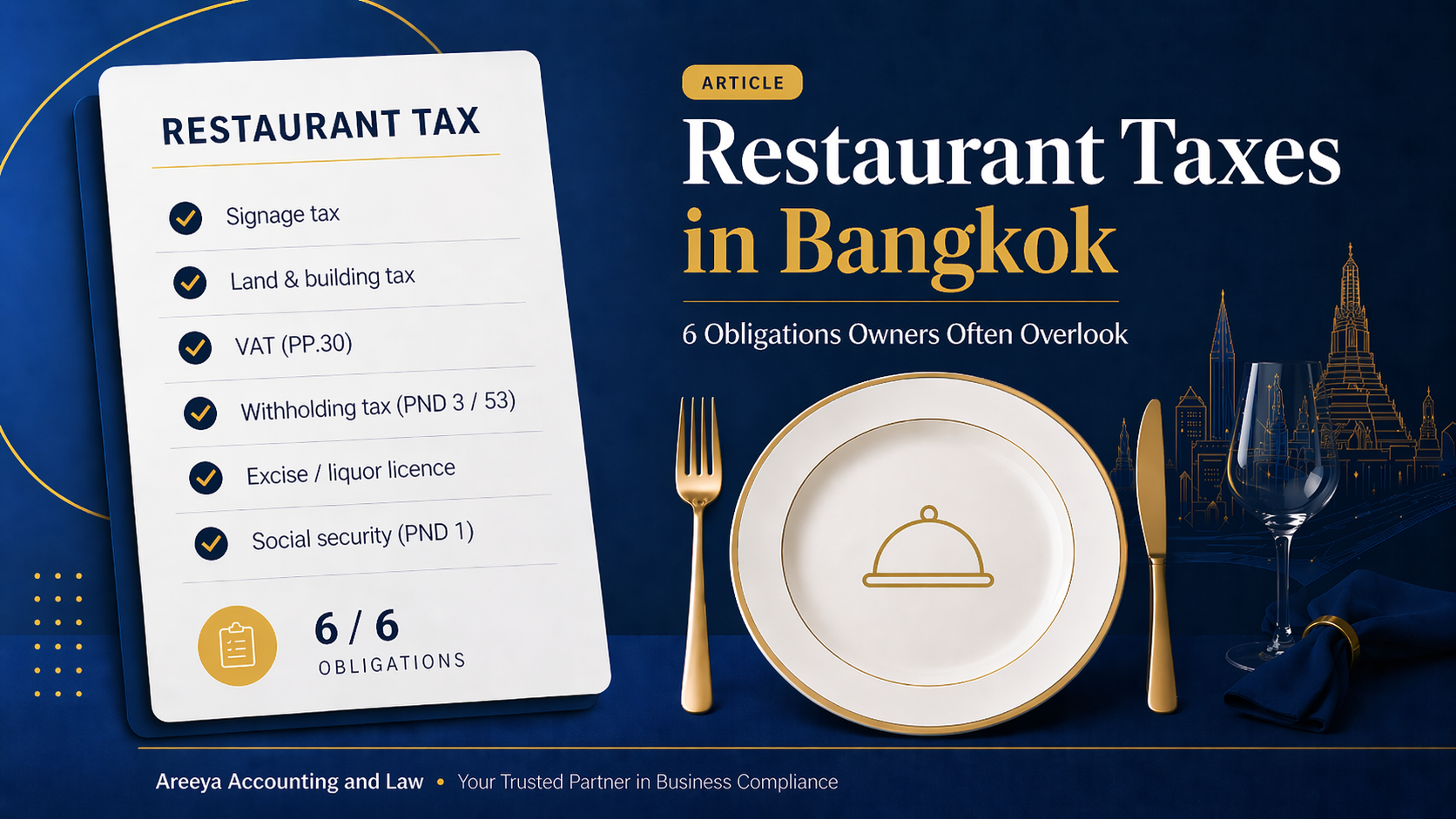
Running a restaurant in Bangkok is competitive and operationally demanding. Most owners focus on menu, ingredients, and guests — and end up overlooking tax obligations that are quietly stacking up in the background. Here are six taxes every Bangkok restaurant owner should have on their radar, before the tax office or district office comes knocking.
1. Signage tax — the easiest one to forget
If your restaurant has any permanent sign — illuminated, painted, sticker, or metal — you owe signage tax annually to the Bangkok Metropolitan district office where the restaurant is located. Rates depend on size, type of lettering, and language used on the sign.
Returns are due in March each year. Late filing triggers a 10% surcharge on the tax due.
2. Land and building tax
If you own the premises the restaurant operates from, you pay land and building tax at the “commercial use” rate — which is higher than the residential rate.
In Bangkok, collection is handled by your district office, and payment is due by the end of April each year. If you rent the premises, the tenant typically doesn’t bear this cost — but check your lease carefully so it’s clear who is responsible.
3. VAT (value-added tax)
Once restaurant revenue exceeds THB 1.8 million per year, you must register for VAT within 30 days of crossing the threshold.
Once VAT-registered, you must:
- Issue a tax invoice for every sale (including retail customers who ask)
- File PP.30 monthly, even in months with zero sales
- Separate input and output VAT, and keep clean records
A common pitfall for SME restaurants: revenue across multiple branches, delivery platforms, and online pre-orders quietly adds up past 1.8 million without the owner noticing.
4. Withholding tax
When the restaurant pays for rent, advertising, or services (consultants, marketing, cleaning, security, etc.), you generally have to withhold tax at the statutory rate and remit it to the Revenue Department by the 7th of the following month via PND.3 or PND.53.
Miss this, and the restaurant — not the recipient — ends up covering the tax out of pocket, plus a surcharge.
5. Excise licences (for restaurants serving alcohol)
Restaurants serving beer, wine, or spirits need a liquor licence from the Excise Department, and must pay excise tax based on the type of drink.
A common pitfall: restaurants using a Type 4 licence (retail) when they should hold a Type 3 (on-premise retail sale for consumption). Check that the licence category matches the operating model before opening — the wrong licence type carries fines and possible revocation.
6. Social security and employee payroll tax
The moment your restaurant has one permanent employee, you must:
- Register as an employer with the Social Security Office
- Withhold 5% of salary for social security, add a matching 5% employer contribution, and remit by the 15th of the following month
- Withhold employee personal income tax (if applicable) and file PND.1 monthly, plus PND.1 Kor as the annual summary
Build the system before you need it
Restaurants in Bangkok touch more tax obligations than almost any other SME — premises, signage, staff, inventory, licences, and a wide range of paid services. Getting the accounting and tax system in order from day one lowers your risk and frees you up to focus on building the brand.
If you’d like a second opinion on your restaurant’s tax setup or a complete bookkeeping and compliance service, get in touch — the initial consultation is free.